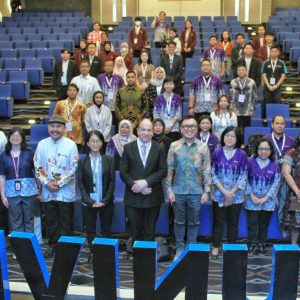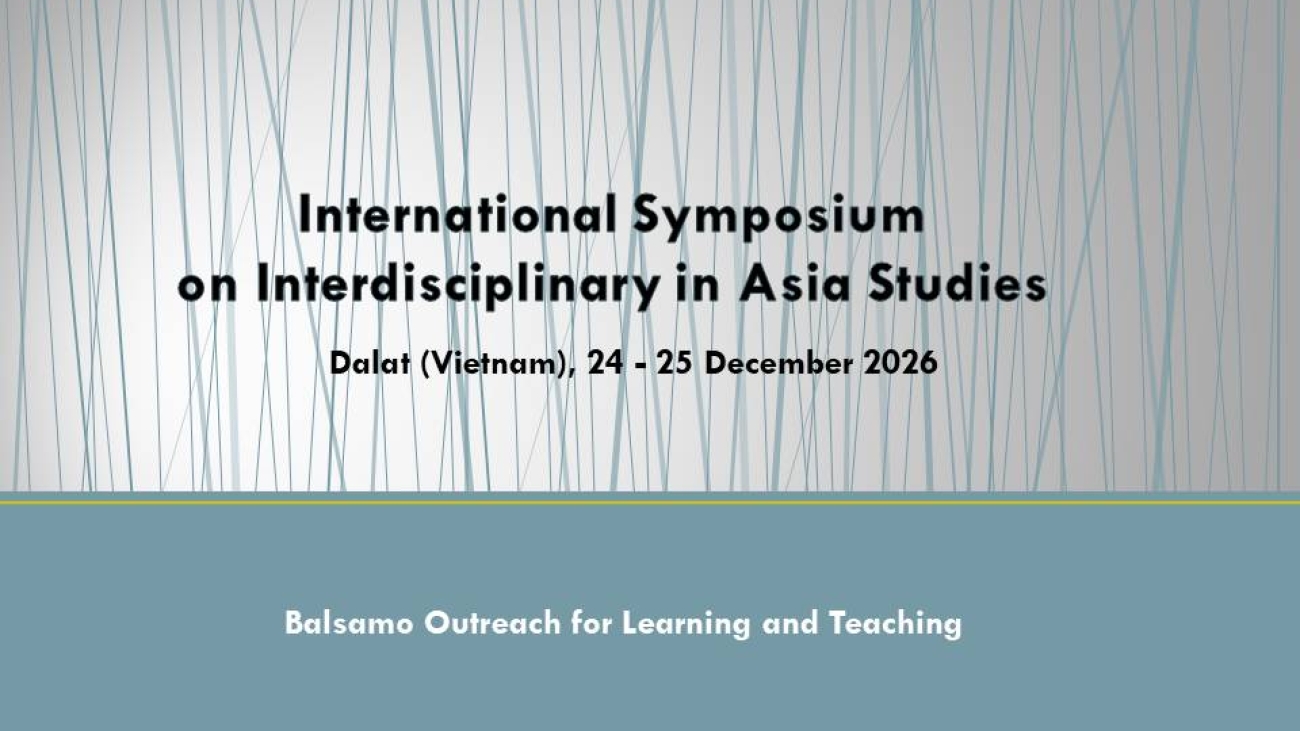
Bolt.unmuhbarru.ac.id, Dalat, Vietnam – Announcement International Symposium on Interdisciplinary in Asia Studies 2026, It will take place in Dalat on 24-25 December 2026.
The Imperative of Interdisciplinary Asia Studies
The field of Asia Studies has evolved from a historically Eurocentric focus to a vibrant, essential area of contemporary academic inquiry. Reflecting the immense geographic, cultural, and political diversity of the continent—from the Middle East to East Asia and the Indian subcontinent to Southeast Asia—this discipline is fundamentally area-focused . However, no single academic perspective can adequately capture the complexity of a region home to over sixty percent of the world’s population and myriad historical trajectories. As such, the interdisciplinary approach has become not merely an advantage, but a necessity, serving as the core intellectual framework for a nuanced understanding of Asia’s past, present, and future.
Bridging Disciplinary Divides
Interdisciplinary Asia Studies intentionally bridges the traditional boundaries between established academic disciplines, such as history, political science, sociology, anthropology, religious studies, literature, and economics. A purely historical account of the Opium Wars, for example, is incomplete without anthropological context on local communities, economic analysis of trade, and political science perspectives on international relations. This approach mandates the integration of diverse methodologies, from the close reading of texts (humanities) and the ethnographic fieldwork (social sciences) to quantitative data analysis, allowing scholars to synthesize insights that are greater than the sum of their disciplinary parts. This integrative process enables a more holistic and layered interpretation of complex phenomena across the Asian continent.
Addressing Complex, Global Challenges
The contemporary world is characterized by interconnected, transnational issues that transcend national borders and academic silos. Interdisciplinary Asia Studies is uniquely positioned to address these complex, real-world challenges. Themes such as globalization, urbanization, climate change, nationalism, and the geopolitics of the Indo-Pacific require researchers to combine environmental science with political ecology, or to merge studies of popular culture with economic analysis of global media flows. This comprehensive methodology is crucial for understanding how regional dynamics in Asia—such as rapid economic development or geopolitical rivalries—impact global systems and vice versa, offering insights critical for policymakers, international organizations, and multinational businesses.
Cultivating Critical and Comparative Insight
Ultimately, the interdisciplinary nature of Asia Studies cultivates a powerful comparative and critical framework.2 By engaging with multiple disciplinary perspectives, scholars are encouraged to question established narratives and recognize the dynamic, interconnected, and often contentious nature of the region’s cultures and politics. It moves beyond singular national studies to explore intra-Asian connections, diasporic communities, and transnational phenomena, allowing for the comparison of experiences across diverse regions like East Asia and South Asia.3 This rigorous, boundary-crossing methodology is essential for developing comprehensive knowledge and producing the innovative scholarship required to engage effectively with Asia’s expanding influence on the global stage.